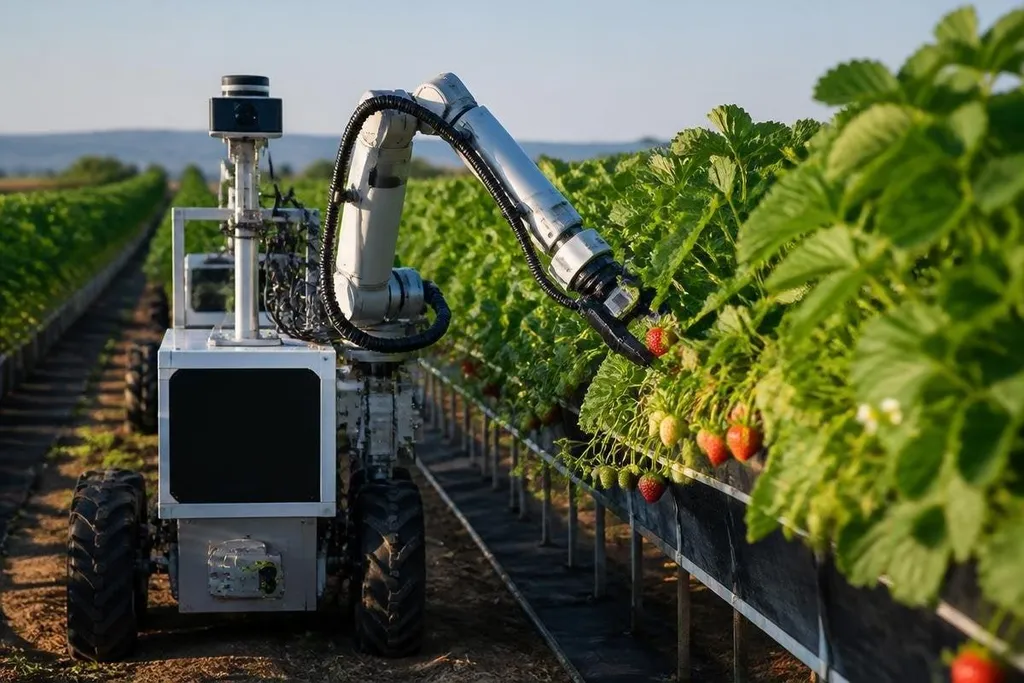
A harvesting robot can drive between crop rows, find produce with cameras, and move a gripper toward a stem. The hard part starts when fruit hides behind leaves, varies in size, or needs a cut at a precise point.
For growers weighing automation, the useful test is practical: can the robot pick enough good produce, keep working in changing light, and avoid slowing the people and machines around it?
Quick read
- Crop fit matters more than a robot’s top driving speed.
- Soft produce needs careful contact, force sensing, and a clear handoff.
- Farm trials should measure good picks, damaged produce, downtime, and labor saved.
The crop sets the problem
A harvesting robot doesn’t face one task. It must locate ripe produce, reach it without breaking nearby growth, separate it from the plant, and place it into a container without bruising it. Each step adds a chance to stop or cause damage.
Cameras can help the robot find color, shape, and position. Those signals change with shade, glare, dust, plant movement, and fruit that sits partly behind a leaf. A system that works in one row at one hour may need new settings later that day.
The gripper matters as much as the camera. Rigid fingers suit some firm crops, while soft contact surfaces may work better for produce that marks easily. Force sensing gives the robot a way to detect contact instead of relying on position alone.
That contact also decides the robot’s pace. A fast arm that damages produce creates extra sorting work, so a slower cycle can make more sense if it raises the share of saleable harvest.
Uptime matters more than a perfect demo
Farm work happens under changing conditions. Mud can affect wheels, dust can cover lenses, and plants can block the route planned earlier. The robot needs a way to detect a failed pick, clear a small obstruction, and call for a person when the task falls outside its limits.
This is where autonomous systems need clear operating rules. A robot should know when to continue, when to try a different angle, and when to stop. Those choices need logs that let a farm team see why a row took longer than expected.
A slow row can hide a delay after the fruit leaves the gripper. A Robot 24 report can place row time, crop, tray size, and handoff method beside the robot’s result, giving a grower a way to price the work left after each pick.
The handoff after picking deserves the same attention. If the robot fills a small tray that a worker must empty every few minutes, the farm may gain a picking machine but keep the same interruption. The full route, from plant to crate, sets the labor result.
The numbers a trial should record
A farm trial needs measures that connect robot behavior to crop income. A manufacturer’s video can show a successful pick, but it cannot show how often the system pauses, misses fruit, or needs a person nearby.
I’d skip any harvesting robot sold on speed alone. A useful trial should compare its cycle time with the share of produce that reaches the crate undamaged.
Record these measures in the same field and across changing conditions:
- Good picks: produce removed and placed in the target container without visible damage.
- Missed picks: ripe produce left behind after the robot completes its pass.
- Damage rate: bruised, cut, dropped, or otherwise downgraded produce.
- Human help: stops that need a worker to guide, clear, reset, or repair the system.
- Coverage: row length or crop area completed during a shift.
- Service time: minutes spent cleaning sensors, charging, changing tools, or fixing faults.
Those figures give the farm a better basis for a purchase than a single best-case run. They also expose where the robot needs work: vision, motion, gripping, route planning, or the crate handoff.
Before a farm buys one
Use the trial plan to answer five practical questions:
- Crop and variety: Has the robot handled the exact plant structure and produce type?
- Working conditions: Does it run through shade, glare, dust, wet ground, and uneven rows?
- Quality target: What share of picked produce must remain saleable?
- Human coverage: How many people must stay near the robot during normal work?
- Repair plan: Who cleans, charges, resets, and fixes it during the harvest window?
A robot that fits one crop may need a new gripper, camera setup, or route plan for another. The next generation will earn its place when farms can measure those changes in good produce per hour, not in minutes of polished video.